Summer Pool Maintenance in Texas: How to Keep Your Pool Clean, Clear & Ready to Swim
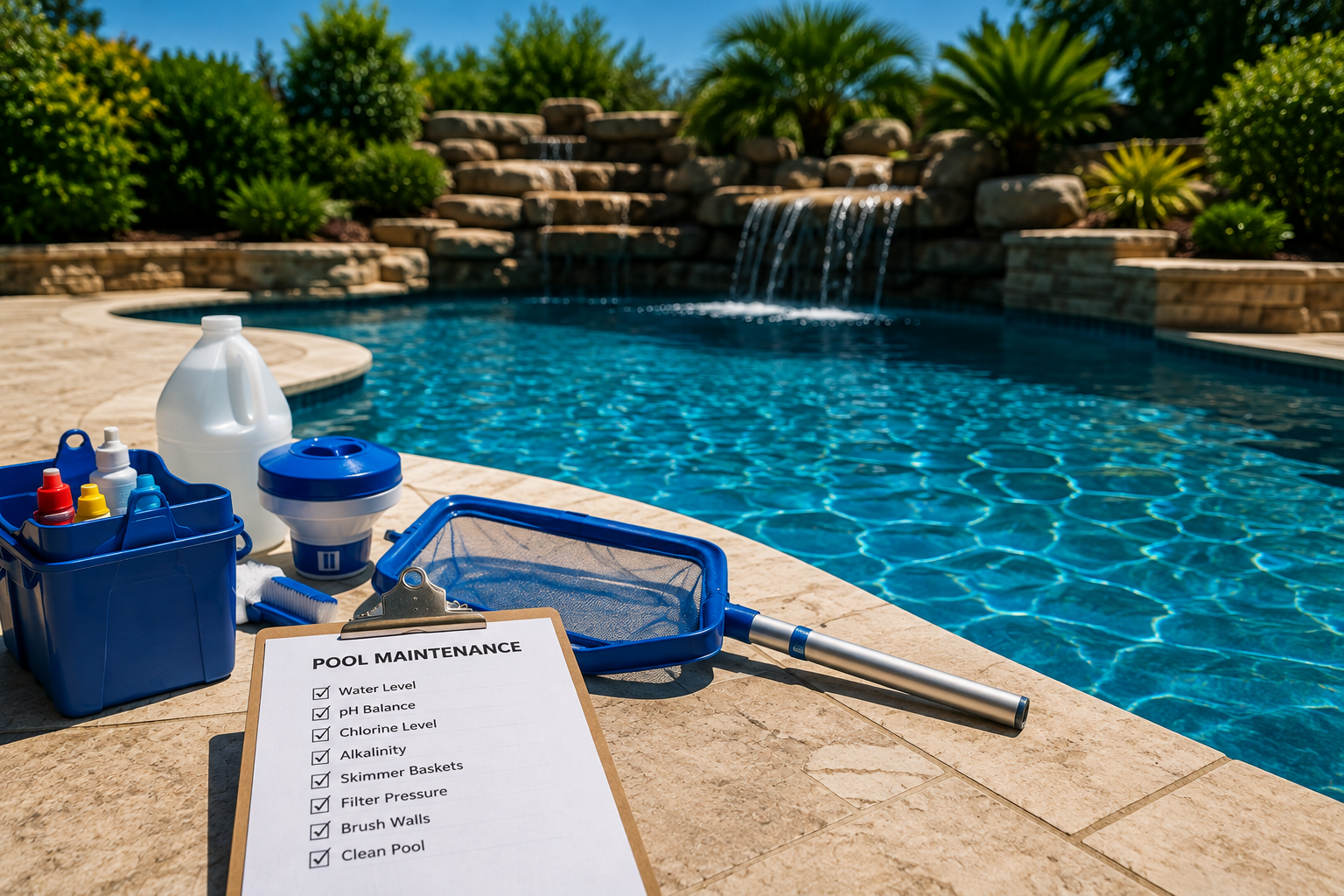
When July arrives in Central Texas, your swimming pool is probably getting more use than almost any other time of year.
Between triple-digit temperatures, summer storms, sunscreen, landscaping debris, and extra swimmers, July can also be one of the most demanding months for pool maintenance in Texas.
A little consistent care can go a long way toward keeping your water clean, clear, and ready for another Texas summer.
Here are some of the most important things homeowners should be paying attention to.
1. Check Your Pool Water Regularly
Texas heat can affect pool chemistry quickly.
During periods of heavy use and extreme temperatures, test your pool water regularly and keep an eye on important factors such as:
Chlorine or sanitizer levels
pH
Total alkalinity
Calcium hardness
Stabilizer levels
Properly balanced water isn't just about keeping the pool looking good. Water chemistry also plays an important role in swimmer comfort and protecting pool surfaces and equipment.
If you're unsure about your water chemistry, have your water professionally tested rather than guessing.
2. Don't Ignore Your Water Level
Have you noticed yourself adding more water to your pool in July?
Some water loss is normal.
Central Texas heat, direct sunlight, low humidity, wind, and regular swimming can all contribute to evaporation.
Keep an eye on the water level and maintain the appropriate level for your pool's skimming and circulation system.
However, if your pool seems to be losing significantly more water than usual, don't automatically assume it's evaporation. Unexplained or excessive water loss may warrant a professional inspection for a potential leak.
3. Empty Your Skimmer and Pump Baskets
Leaves, bugs, grass clippings, and other debris can quickly accumulate during the summer.
Regularly checking and emptying your skimmer and pump baskets helps your pool's circulation system operate properly.
This becomes especially important after summer storms or windy days when a large amount of debris can enter the pool at once.
4. Brush and Clean Pool Surfaces
Even when the water looks clear, your pool still needs regular cleaning.
Brush walls, steps, benches, tanning ledges, and other surfaces where buildup can develop.
Pay extra attention to areas with lower circulation, including corners and steps.
Routine brushing and cleaning help prevent dirt and buildup from becoming more difficult to manage later.
5. Keep an Eye on Your Pool Filter
Your filter does a lot of work during a Texas summer.
When your pool is being used frequently, more sunscreen, oils, dirt, landscaping debris, and other contaminants enter the water.
Monitor your system and clean or service the filter according to the manufacturer's recommendations and the needs of your specific equipment.
Good filtration and circulation are essential for maintaining clear water.
6. Give Your Pool Extra Attention After a Storm
Texas summer storms can change pool conditions quickly.
Wind and rain can introduce leaves, dirt, pollen, and other debris into the water. Significant rainfall can also affect water chemistry.
After a major storm:
Remove large debris
Empty baskets
Check the water level
Test your water chemistry
Inspect the pool and surrounding area
Make sure your circulation system is operating normally
Getting ahead of the cleanup can help prevent a small issue from becoming a much bigger one.
7. Remember That More Swimmers = More Maintenance
Pool party this weekend?
Your pool may need some extra attention.
More swimmers introduce more sunscreen, body oils, dirt, and other contaminants into the water.
If you're expecting a busy weekend, check your water beforehand and again afterward.
The goal is simple: keep your pool ready for the next swim.
8. Don't Forget the Area Around Your Pool
Pool maintenance doesn't stop at the waterline.
Regularly inspect your decking, drains, outdoor living areas, landscaping, and equipment.
Keep landscaping trimmed appropriately and remove debris before it ends up in the pool.
A clean pool environment can reduce the amount of maintenance required inside the pool itself.
When Should You Call a Pool Professional?
Some pool maintenance can easily become part of a homeowner's weekly routine.
Other problems deserve professional attention.
If you're experiencing persistent cloudy or discolored water, unusual equipment noises, circulation problems, unexpected water loss, damaged finishes, or another issue that doesn't improve with routine maintenance, it's better to investigate than ignore it.
Keep Your Central Texas Pool Ready for Summer
A beautiful pool is an investment, and regular maintenance helps protect it.
During July, consistency is especially important. Keeping up with water chemistry, circulation, cleaning, and equipment checks can help your pool stay beautiful through the hottest months of the year.
Johnson Custom Pools has more than 35 years of experience designing and building custom swimming pools and outdoor living spaces throughout Central Texas.
From Austin and Bee Cave to Lakeway, Dripping Springs, and surrounding Hill Country communities, we create custom pools designed for the way Central Texas homeowners live.
Thinking about creating a pool of your own?
Contact Johnson Custom Pools to schedule a custom pool design consultation.